
From 1933 to 1945, one-fifth — a total of 20% — of all Western artworks of all time in existence were stolen; that is approximately 650,000 pieces of art, valued approximately at tens of billions of contemporary American dollars. If the scope of items we consider in this equation is expanded to include stolen fine art objects of all materials and mediums, such as furniture, rare books, religious artifacts, gold, coin collections, antiques, and family heirlooms, the total quantity of works stolen exceeds 5 million, with value beyond our capacity to calculate.
In Hitler’s Mein Kampf, alongside his philosophy of eugenics, he proclaimed modern art to be a cultural and biological disease threatening the genetic purity and survival of the German — “Aryan” — nation. Modern art was a filthy, parasitic plague; it represented the fault of genetic impurity and the inferiority of the mentally ill and the “other.” The art eugenics were in full swing; biological otherness, genetic difference, and mental expression or peculiarity were in need of a purified takeover, and of an utter, rampant destruction at once! The Expressionists, the Dadaists, and the Surrealists all had one thing in common — a certain physical “ugliness.” The works were filled with the conflicting dangers of curiosity, distortion, impurity, deviation, and implications of “ugly, inhumane” mental disturbances and psychological conditions. These were all things important for humans to express, to feel, to explain, to articulate through art and through independent, unregulated creation, therefore, were all things threatening to Hitler’s ideal of a purified, futuristic, classical, national German identity.
Mental illness was social disease, and otherness was genetic criminality.
Why else would Hitler want to disrupt the art world? Well, Jewish people made up the financial and cultural backbone of the art scene and market at the time, as they were Europe’s avid art collectors, dealers, entrepenuaers, and pioneers of the modernist art era. They loved all things new and innovative, creative and expressive, and supported heavily new artists and creative efforts. Jewish people held the cultural and financial foundation of the up-and-rising modern art scene. The art market’s value, function, and importance lied in the hands of Europe’s Jewish population. The art of the late nineteenth and early twentieth centuries succeeded greatly thanks to the Jewish creative culture that allowed for such acknowledgment and expansion of the movement. With the Nazis’ biological obsession with genetic and mental purity and the annihilation of otherness, backed by their philosophy of eugenics, the art world was, it seemed, inherently diseased at its very core. The German genetic legacy needed to steal back culture, return to purity, flush out disease, and build a genetically perfect, “Aryan” kingdom with full control over every aspect and function of society’s expression. Jewish power in Europe was too ugly, too diseased.
The Third Reich adapted these ideals, and in addition to the particular visual and thematic motives, and the motive to remove Jewish people from culture altogether, the Nazis were financially driven, too: They were well aware of the monetary value of the pieces they had deemed deviant, and intended to confiscate them to invest and liquidate the value to fund the war and the Third Reich’s futurist ideas for their anticipated nationalist victory. The Nazis could condemn the subject matter all they wanted, but the value was internationally objective. The works were frozen financial assets with extraordinary currency. The Nazis actually gifted looted works to each other, as they were well aware of this great value, culturally and financially. Many of them were art collectors and connoisseurs, and the mind-boggling concurrence of the humanity that is understood to be needed to appreciate art, and the Nazis’ complete and utter inhumanity is a troubling paradox that we may never understand.
The Nazis held auctions and private sales of some of the artworks, hoping to liquidate the funds however they could. Hitler seized and collected many of the significant looted artworks for his unrealized plan of a grand art museum — “Führermuseum” — in his hometown of Linz, Austria, which, he hoped, would become the artistic capital of the Third Reich after the war. He personally reviewed photographs of captured artwork inventories presented to him by his task forces, and selected the finest, fittest pieces for his vision: a clean, purist, “Aryan” selection.
So to say the looting of the art was only an attempt at controlling art subjects and themes, or necessarily and solely a condemnation of modern art is historically incorrect: it was means of securing German nationalist financial control, extensive Jewish cultural and foundational erasure, an excuse for the seizure of important, historic Jewish property, and personal, greedy aggrandizement. It was an attempt to completely destroy the Jewish backbone in society, to cleanse German culture of such disease, to rewrite history as solely “Aryan.” Important to mention, modern art was not all that was looted — Hitler and his task forces looted museums and Jewish-owned collections containing classical, German, Dutch, and Flemish historic fine art and objects, as well, as these categories were his personal favorite, and exemplified the genetic perfection he philosophized of in Mein Kampf, and was what he hoped to steal for his “Aryan” museum. Interestingly enough, Hitler’s architectural blueprints for his personal museum “Führermuseum” were quite… modern looking. I suppose his line between Neoclassicism and modernist architecture was… subjective. The severe monolithic uniformity and geometry of his model rings reminiscent of contemporary architecture, and the stripped down features and sharp grids remind me of, say, Lincoln Center?
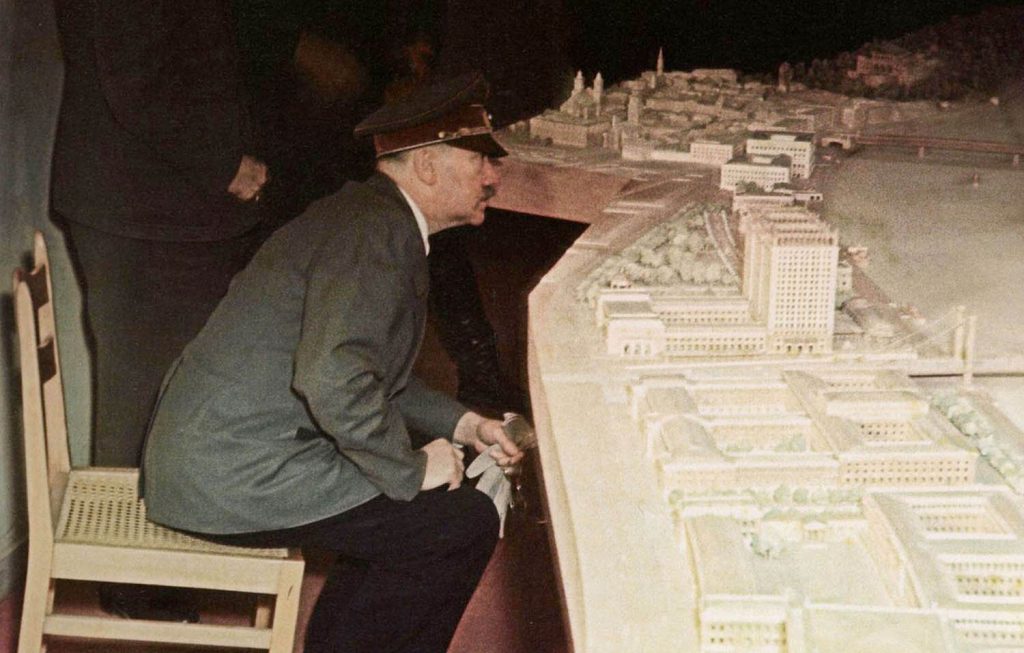
The art plunder moved far beyond a mission of censorship, and bled into the rampant theft we know it as today, fueled by greed and entitled, power-hungry narcissism. Stripping this cultural and financial power from the Jewish art world was intrinsic to their manifesto: Nazi decrees enacted between 1937 and 1938 systematically barred Jews from owning property, businesses, German citizenship, and economic rights. Jews were completely and strategically dispossessed. The war on art was eugenic.
What was to follow the initial proclamation of this eugenic ideology was the extensive plundering, confiscation, and looting of any museum, gallery, or Jewish family art collection The Nazis could get a hold of throughout Europe. Now the illegal owners of these works, in a heavily curated, publicized show in the summer and fall of 1937, the Nazis displayed this “degenerate art” that had taken over German legacy, giving society one last chance to view the works before they were pillaged from society forever for a “greater good.” The list of 112 artists displayed includes infamous modernist characters like Otto Dix, Ernst Ludwig Kirchner, Wassily Kandinsky, Marc Chagall, Franz Marc, Paul Klee, Pablo Picasso, Karl Schmidt-Rottluff, and Kurt Schwitters. Music defined as “degenerate,” as well, was a part of the exhibition, which excoriated jazz, Jewish music, and modernist musical compositions by composers such as Arnold Schoenberg, Igor Stravinsky, and Kurt Weill.
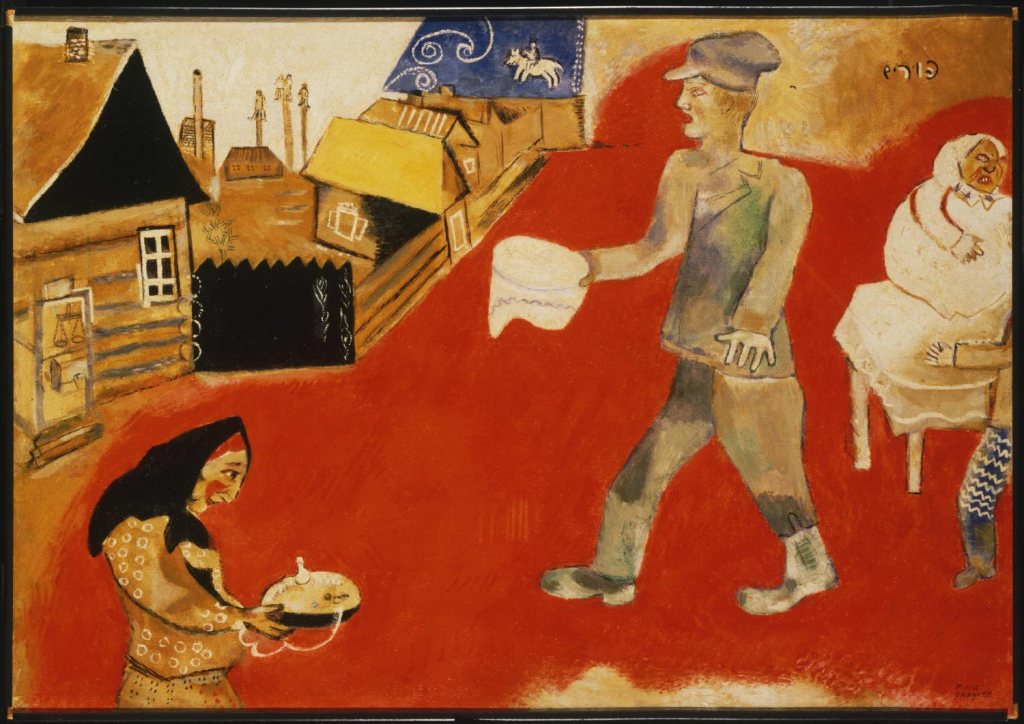
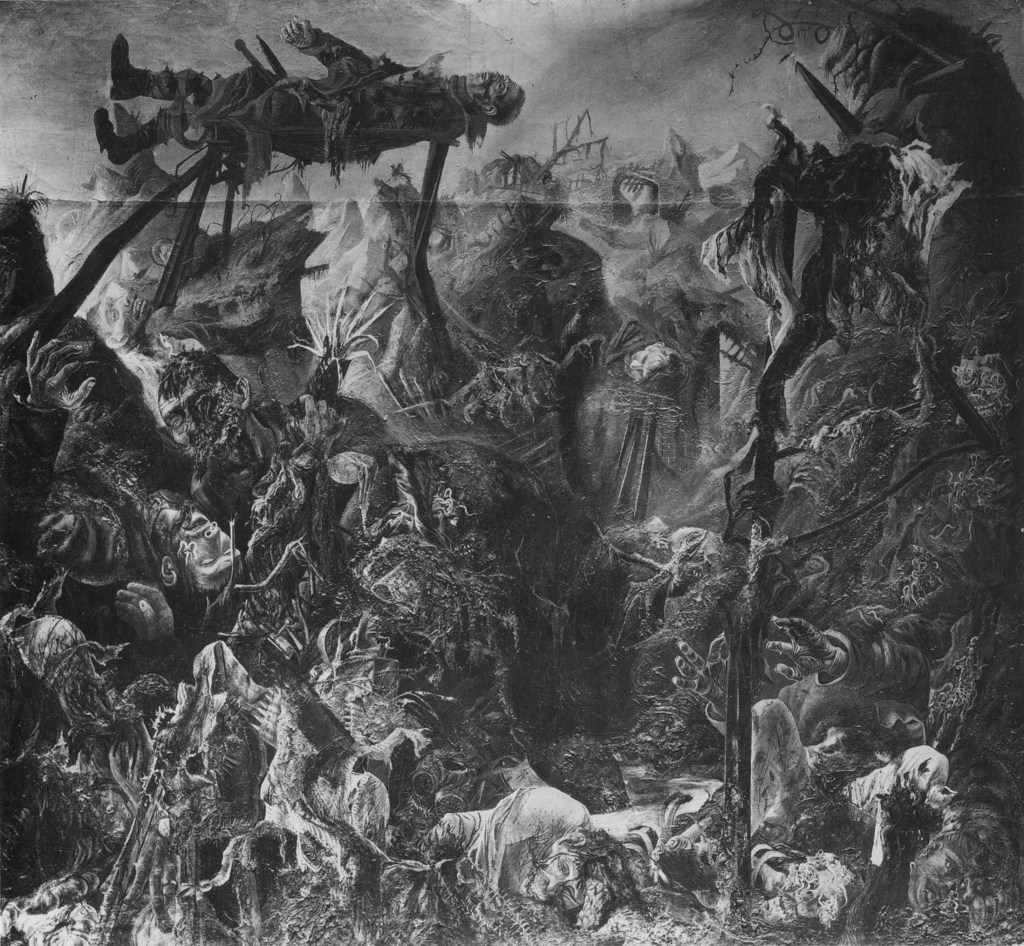
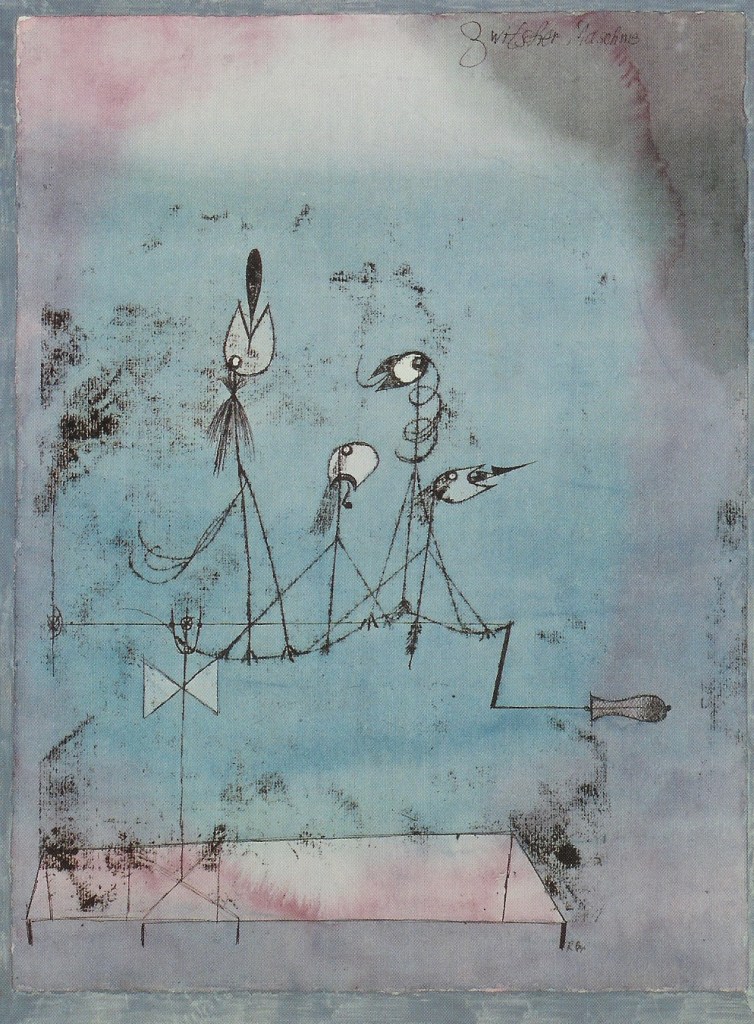
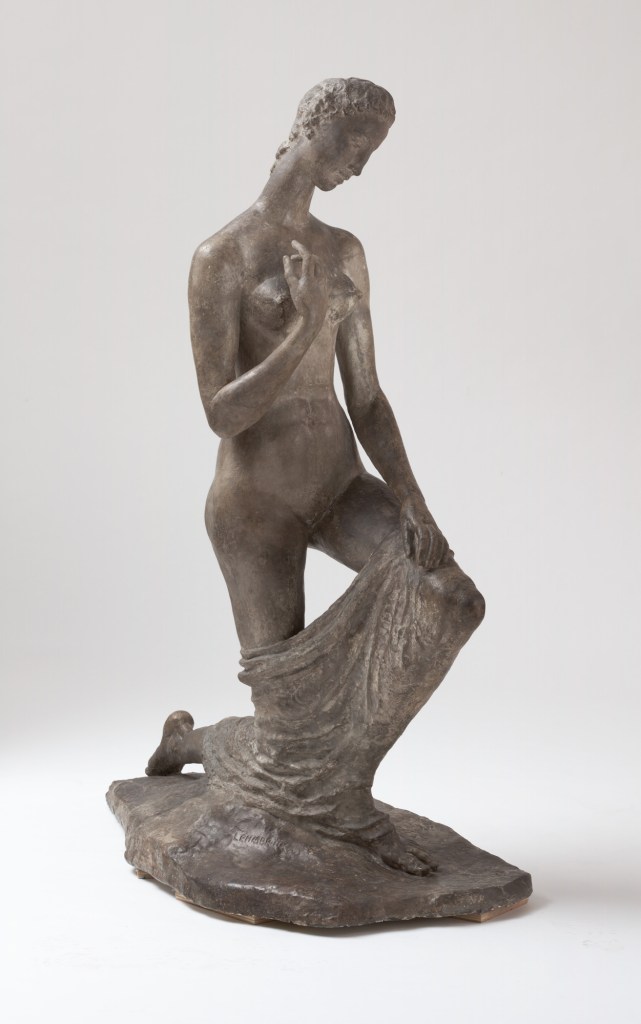
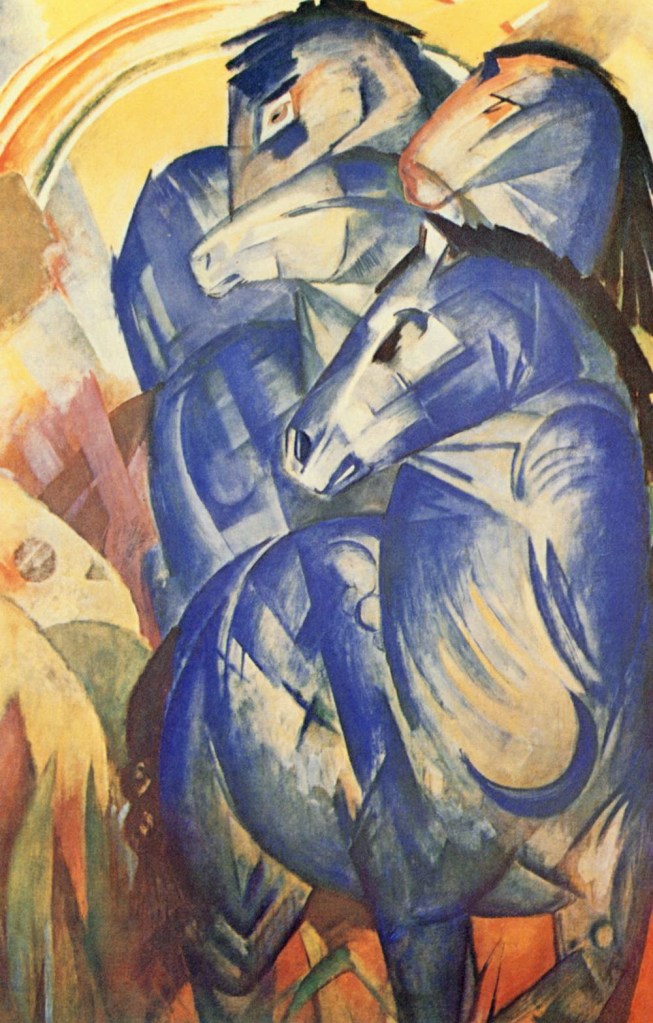
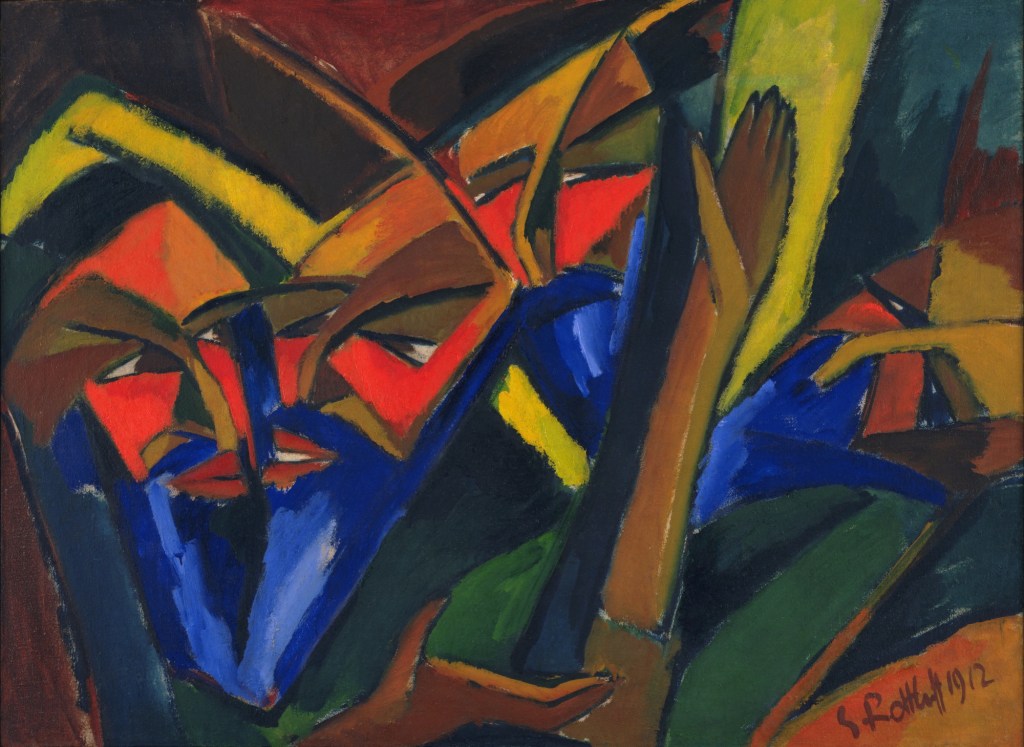
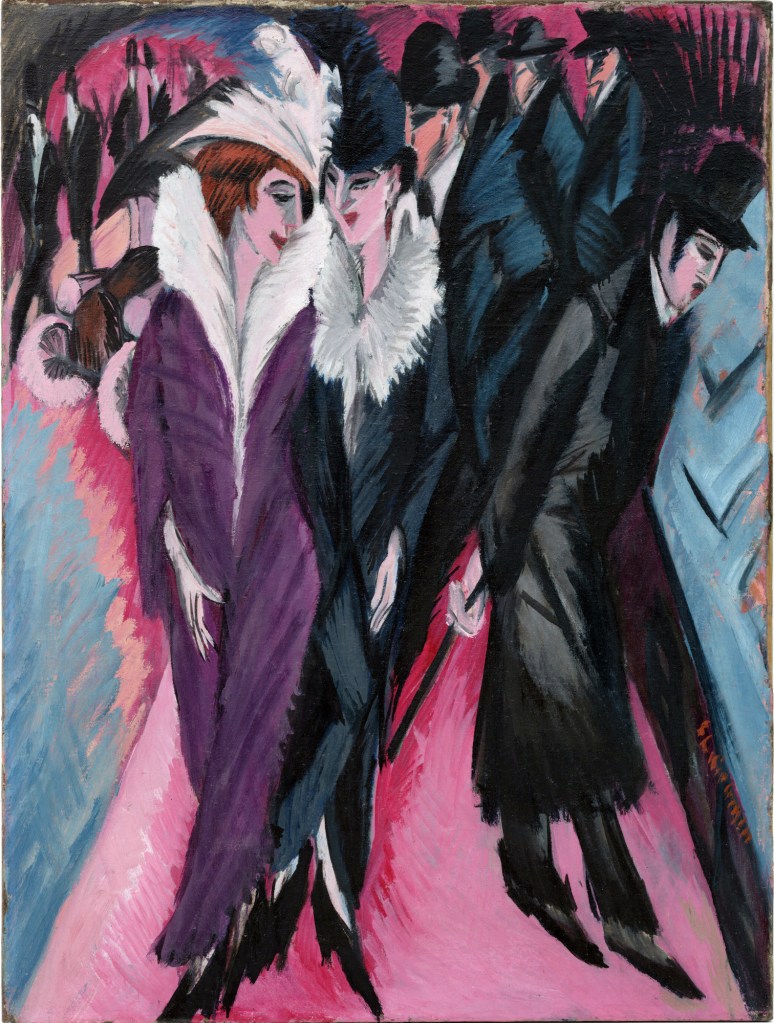
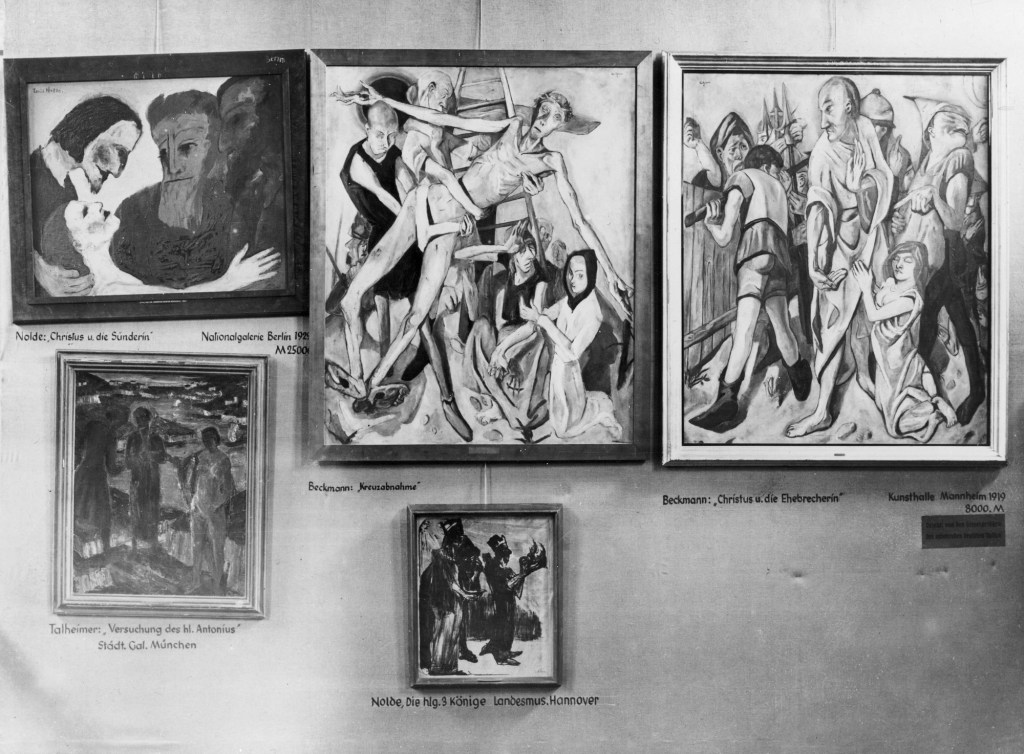
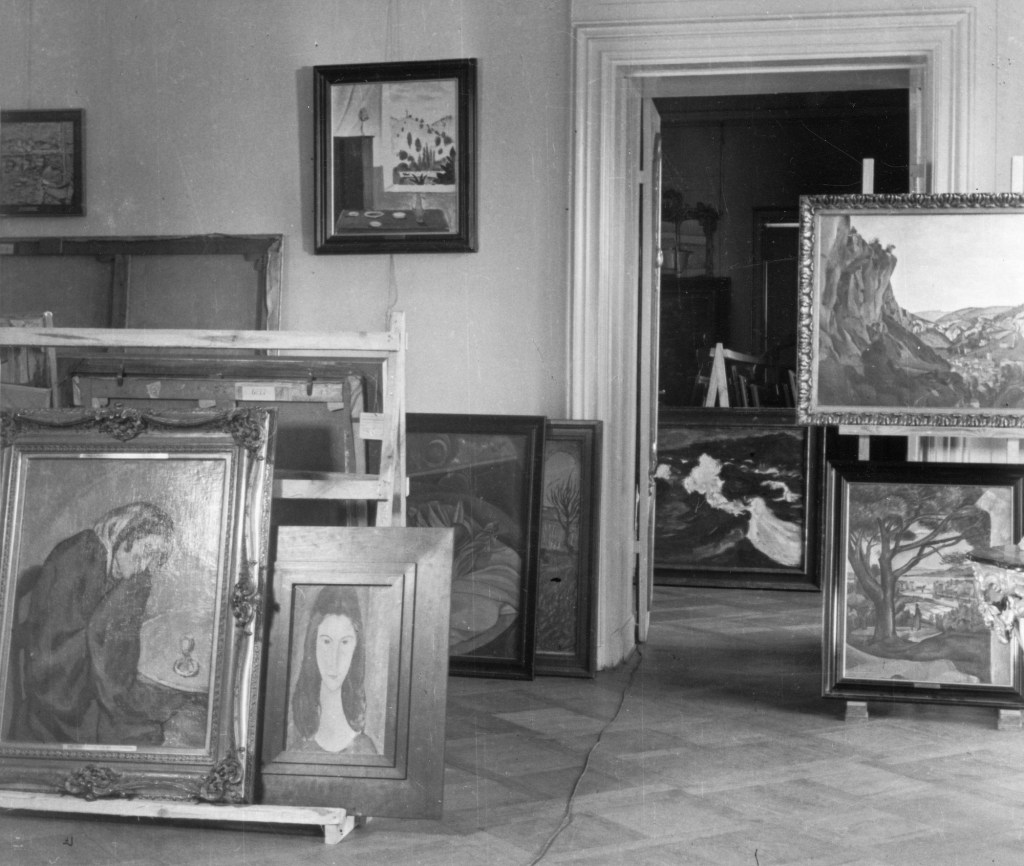
Everyone who could made a presence — over 2 million people — did so, marking the show one of the most attended art shows in all of human history. History and culture as it was known was on the promised brink of disintegration into complete nothingness, and to get just a glimpse of these historical signifiers of an anticipated ruin of society was a top priority for all, including high ranked Nazi officials, who are photographed pining over the works in complete, total focus, as they knew quite well what was to come. Artworks were stripped of their dignity, ripped from their frames, crudely handled, hung crookedly, and stacked unpleasantly. Offensive slogans were graffitied across the walls, such as “nature as seen by sick minds,” “madness becomes method,” “German farmers — a Yiddish view,” “revelation of the Jewish racial soul,” “the ideal—cretin and whore,” and “an insult to German womanhood.”
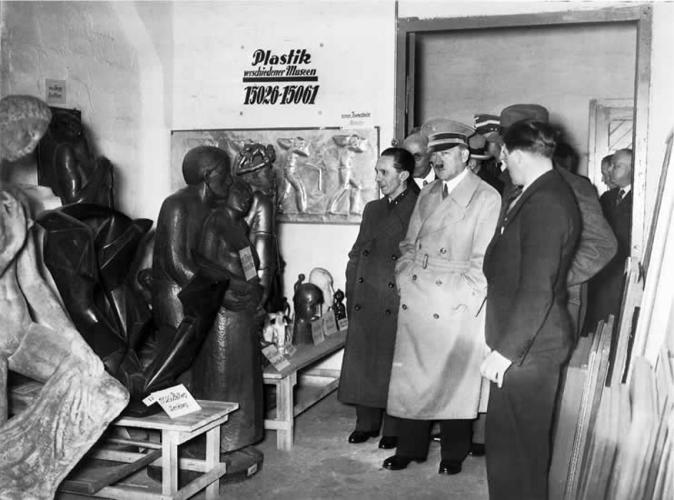
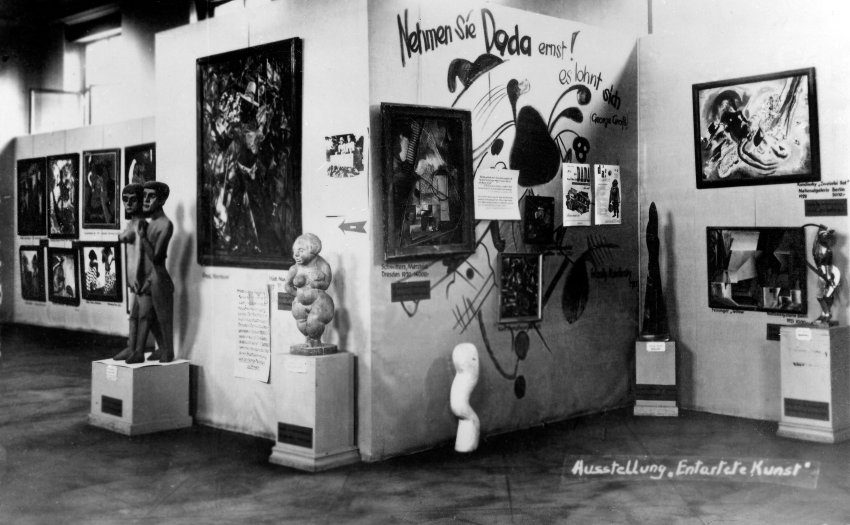
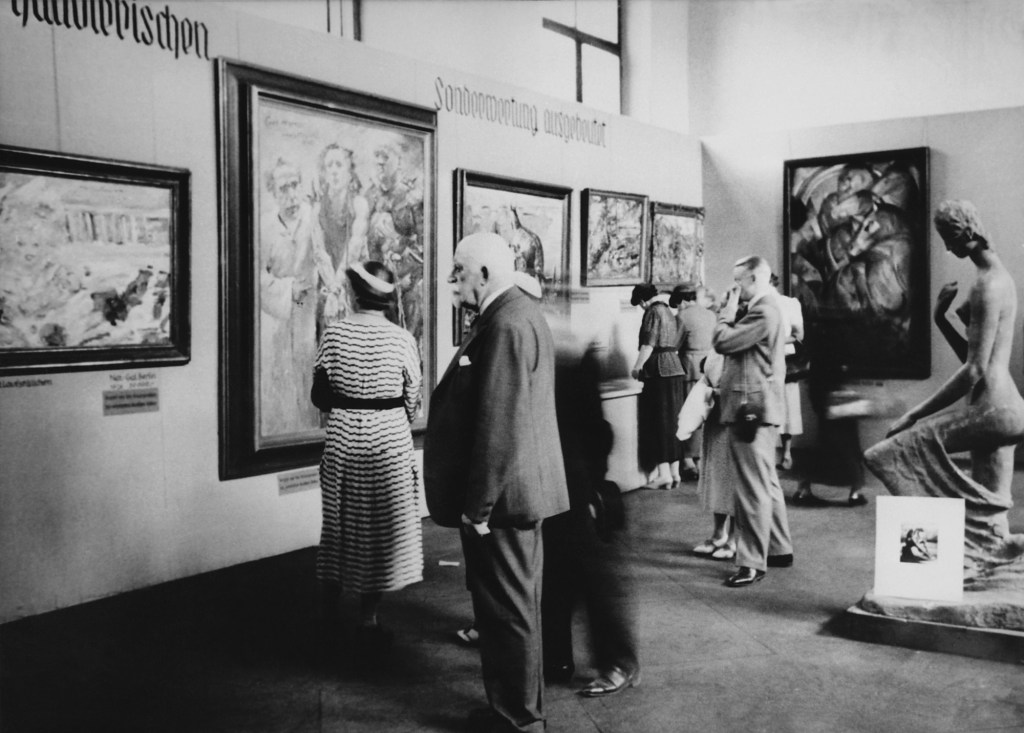
It was a known fact that these artworks — pieces so valued in society, so cherished by many, so known and so famous — will never be seen again. It was apocalyptic. The end of a certain humanity. You just had to see the show, you couldn’t dare miss it. It was the last hurrah, it appeared, to the beloved avant-garde and the up-and-rising modern art movement, a movement so new and so genuinely descriptive of the human condition. The modern expression of humanity, mentality, and existence was never to be seen again. Society was to be pushed back in time, and yet to a time that had never quite actually existed, as humans have always been expressive in the ways they could, and prone to the mental “ugliness” Hitler deemed diseased.
What a confusing, unrealistic, cataclysmic attempt at a factitious future past. And what a way to publicize an exhibition.
In 1940, to conduct a more thorough plundering and appropriation of Jewish cultural property, an organization called Einsatzstab Reichsleiter Rosenberg für die Besetzten Gebiete was formed by Nazi military leaders Alfred Rosenberg and Hermann Göring. It operated in France, the Netherlands, Belgium, Poland, Lithuania, Latvia, Estonia, Greece, Italy, and on the territory of the Soviet Union in the Reichskommissariat Ostland and Reichskommissariat Ukraine. The “war loot” was collected at a specific point in Paris called Jeu de Paume, where everything was very specifically inventoried and documented; the Germans were quite particular about their documentation, and had extensive, detailed notes and thorough label systems for looted artworks. Hitler was insistent on the artworks being made available to him directly, and Göring insisted as well on the artworks being divided between Hitler and himself, so the inventories were then sent to Germany. Rejected pieces from Hitler were then made available for other Nazi leaders. There were quite a few Nazi organizations actually that shared the same mission, including the organization led by art historian Hans Posse who was in charge of assembling Hitler’s chosen works for his aspirational post-war museum in Linz.
Come November 1944, the American Art Looting Investigation Unit was created to investigate the Nazis’ art looting to prosecute war criminals and restitute property. Interrogations were conducted, information was compiled, and investigations were underway. Names of Nazi officials, art dealers, and others involved in the confiscations were detailed and reported, creating one of the key records of the US Government Archives of Nazi Era Assets.
The Soviets also investigated the Nazi plundering that occurred, and created the Soviet State Extraordinary Commission for Ascertaining and Investigating the Crimes Committed by the German-Fascist Invaders and Their Accomplices. Until 1991, the Commission investigated, collected, and reported on Nazi crimes in the USSR, with explicit details and incidents of plunder. Once the USSR dissolved, the Russian government formed the State Commission for the Restitution of Cultural Valuables as a replacement.
As the war progressed and as Allied forces gained advantage, the Nazis began to hide the artworks in places they believed they would not be found or destroyed by bombing raids. Considering the pieces were delicate canvases, papers, and the like, they decided on salt mines and caves — perfect for controlled humidity levels. An unfinished nineteenth-century castle was the hiding place of artwork stashes, as well. Some of the infamous mines were in Merkers, Altaussee, and Siegen. With the rampant attempt at liquidating the worth of the artworks, and by prioritizing foreign currency to best squeeze from the artworks the most monetary value, many pieces were scattered all across Europe in the process.
These plundered artworks were found in over 1,050 repositories in Germany and Austria at the end of the war. These salt mines and caves were filled to the brim with neatly organized and labeled inventories of fine art and objects, and they were shipped to collecting points to be evaluated.
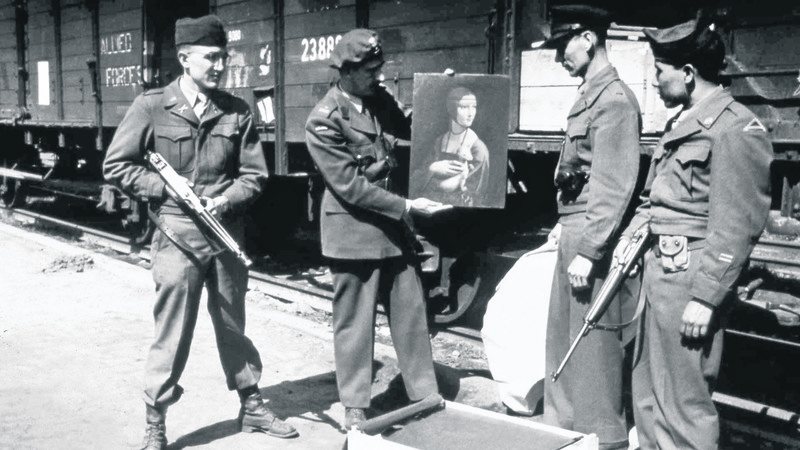
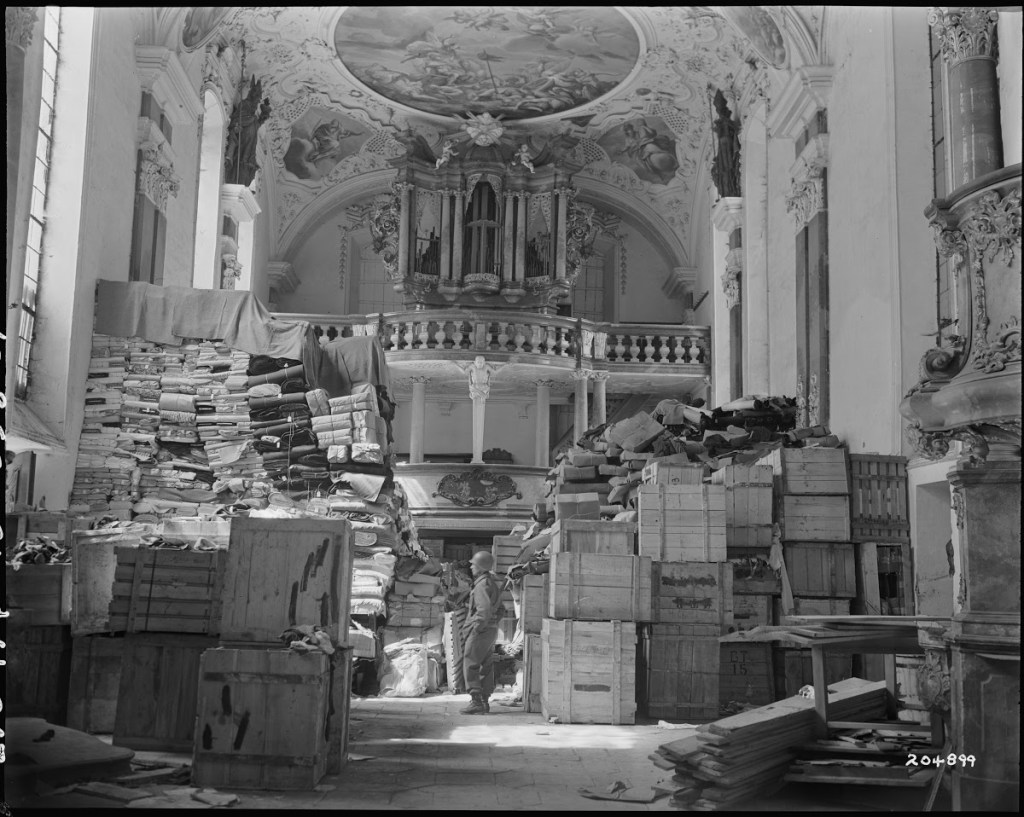
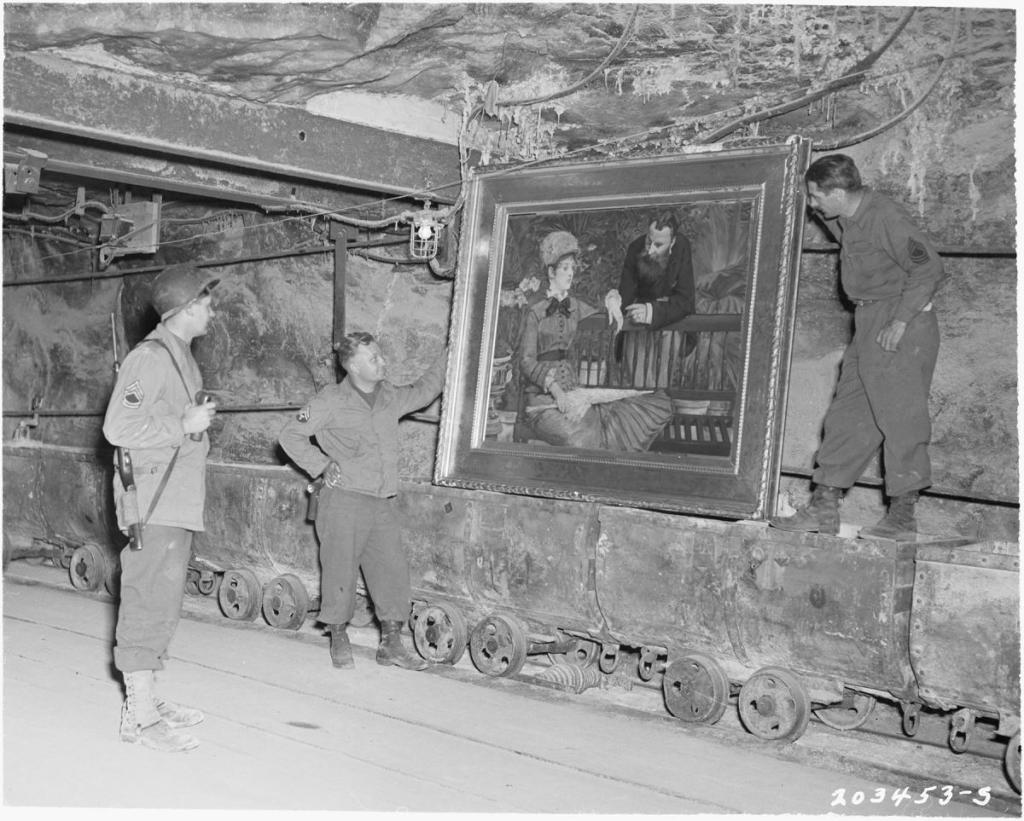
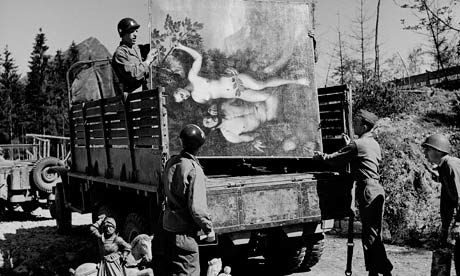
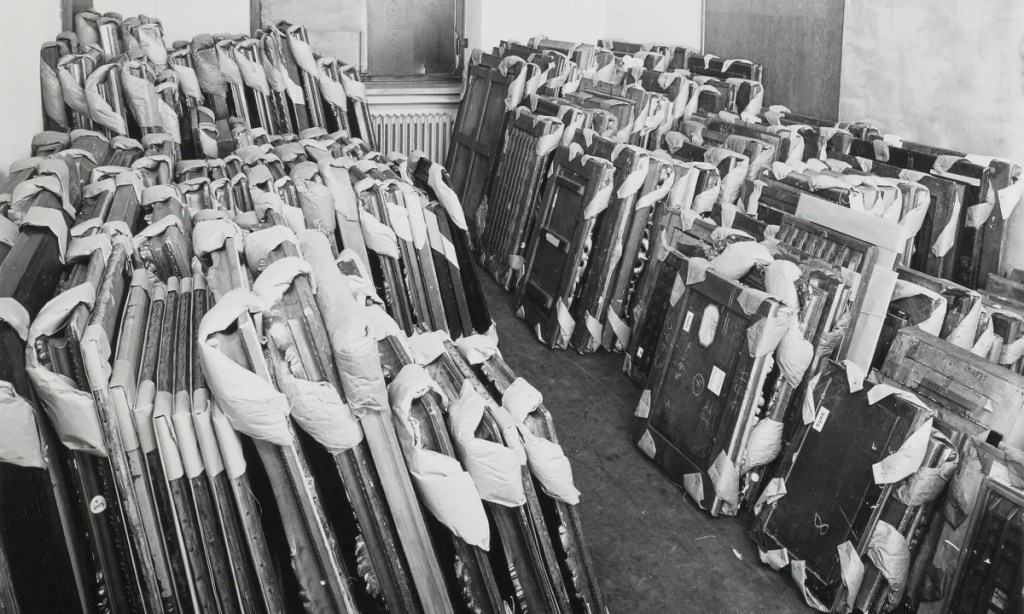
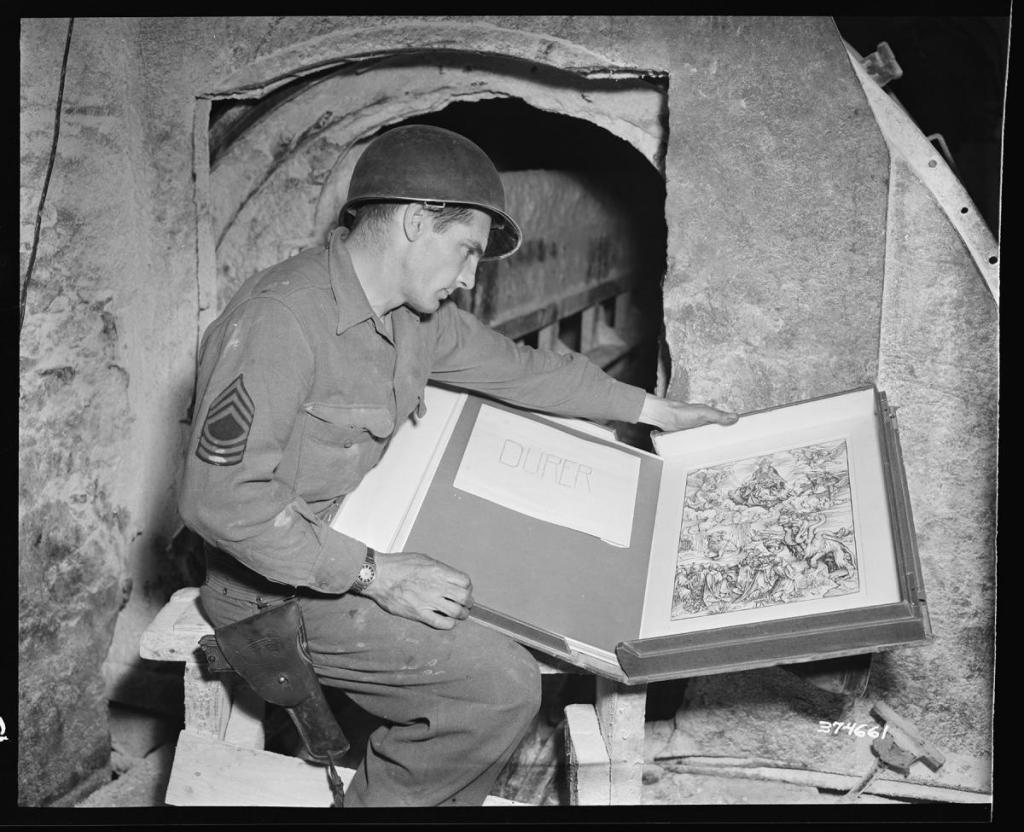
At the end of the war, Germany had a quite a few problems on its plate, and many of the confiscated artworks — although documented, investigated, or recovered — still had not been returned to their rightful owners. Some efforts were attempted, a handful of lists were made up, and museums, galleries, and dealers were encouraged to conduct extensive provenance research to prepare for anticipated claims of rightful ownership. Only in 1998 at a Washington conference did the topic of Nazi-looted assets officially become the Washington Principles on Nazi-Confiscated Art — a set of 11 voluntary ethical guidelines that help identity, research, and reinstitute looted artworks.
It was learned in 1992 that Dutch records from the International Archives for the Women’s Movement — looted by the Nazis in 1940 — were found in Russia. Historian Marc Jensen found 25 boxes of the materials, 50 years after they had gone missing. They had been sent to Berlin initially, moved for security reasons to Sudetenland, and then moved again by the Red Army, after the war, to the KGB’s Osobyi Archive. The papers of notable feminists such as Aletta Jacobs and Rosa Manus were found, along with 4,650 books and periodicals, and various photographs.
Many artworks subject to Nazi looting have been recovered and identified by organizations and restitution efforts such as the Monuments Men, and Monuments, Fine Arts, and Archives Section Unit (MFAA). Despite the dark history many of these works have, their value in the art market actually increases drastically if considered a found Nazi-looted artwork, as finding and authenticating the work requires such an extreme, extensive provenance investigation. Art collectors love the historic background, despite the heaviness, and feel the extensive research done to confirm the piece as authentic gives the piece not only historical value, but concrete proof that their purchase is not a result of forgery, which, when buying and collecting art, is an extremely important, rampant issue to be weary of. Some artists have been heavily forged and faked throughout history — some vastly more than others, such as Amedeo Modigliani, Jewish-Italian artist who worked in Paris — and the heavily documented provenance research conducted to authenticate looted artworks is the greatest evidence of exact history of ownership, which is called “provenance.”
Many believe the Nazis’ plunder of modern art was solely an issue of censorship; that the Nazis only cared for destroying the deviant subjects and themes it encouraged. Of course, this is a large component of the motive, but it only encapsulates a small percentage of the overarching philosophies that led Nazis maliciously to such understandings. It was about completely disintegrating the Jewish backbone in the art market, and obliterating “otherness” from their anticipated utopian “Aryan” kingdom. Modern art enabled such “otherness,” and celebrated psychological disturbances, expressive emotionality, impure, unidealized humanity, and a certain death of outdated, elitist tradition. The movement celebrated differences, genetic variety, cultural contexts, “dangerous” political identities, Jewish heritage, and unrhythmic, disharmonious concepts that greatly perplexed the common viewer. Modern art had broken the forth-wall, introducing art historical reflexivity, the artist’s own individuality, and transgressive, taboo expression within the confines of the canvas — a deeply human phenomenon only established a couple decades prior by the Impressionists and early modern art pioneers. Jewish people created the modern art movement — both the market and the excitement. They were the majority of dealers, creators, and collectors — the very foundation of any art market. Censorship of subject matter was of Nazi importance, but the underlying motive for such a complete plunder was a eugenic ideal to attack the foundation at its root. To remove the very disease, hoping the diseased will soon die out as result.
Provenance investigators and researchers, utilizing the new, extensive technological forensic advancements we have today, have succeeded tremendously in identifying many looted artworks, rebuilding what Hitler had tried to dismantle within the art world. Many Jewish families have had their artworks returned, many museums can properly attribute and update their collections, and descendants of pre-war Jewish art collectors are being rewarded some justice. Every few months now, stories of new findings of Nazi-looted artworks are released, as the mission to undo the harm that was caused — to any extent possible — is worked towards to this day.

