
The rise of the fin-de-siècle’s Art Nouveau inspired many manifestations of the style in the West, such as in major art centers like Paris and Brussels. Although the style’s distinct botanical and kaleidoscopic look is an art history favorite, the sisters Macdonald, Frances and Margaret, are largely left out of the picture, despite their pioneering of Art Nouveau in Glasgow, Scotland. However their husbands, of course, are spoken of quite frequently. They are often accredited as inspirations for artists like Klimt and Hoffman, as their art was displayed in various exhibitions in large cities like Vienna, but with short mentions of their collaboration with their wives.
Born in England, the sisters moved to Glasgow while still very young, where they attended the Glasgow School of Art. The Macdonald’s upper-middle class status enabled such an endeavor, and despite them being women, their education back in England was, as well, especially versatile and thorough. They attended Orme Girl’s School, an English institution known for pioneering female education, a rare phenomenon in the late 1800s. At the Glasgow School of Art, most day students as of 1878 were women; what a great setting for two aspiring female artists! Here they studied painting, enamel, metalwork, and other such material arts. Headmaster Fra Newbery prioritized the innovation of individual artists and the combination of form and function, pledging to teach his students traditional techniques. So very unlike many other United Kingdom school directors, Newbery hired many women instructors during his time there.
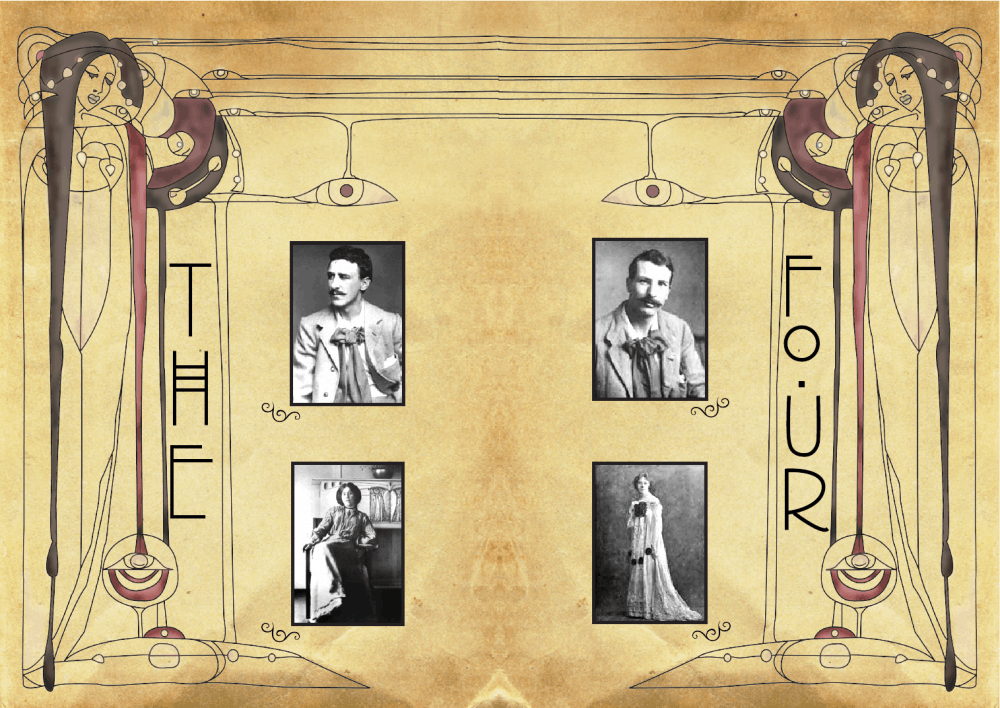
The sisters worked mostly in collaboration, first with each other, than with their respective husbands, Charles Rennie Mackintosh and James Herbert McNair, whom they met during their time at the art school. The men were apprentice architects and already close friends. The couples went on to band together as the “Glasgow Four,” and their style was given the nickname “Spook School” by critics. Their ghoulish, ghostly, contorted figures intertwined with plants and vines, and limbs pulled to unscientific lengths painted femininity quite untraditionally. These techniques displayed feminist and allegorical undertones that the public so commonly found provoking and irritating.
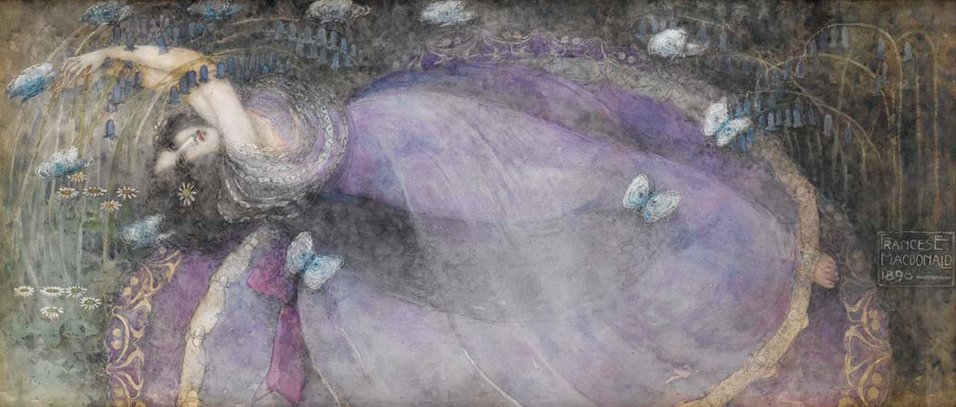
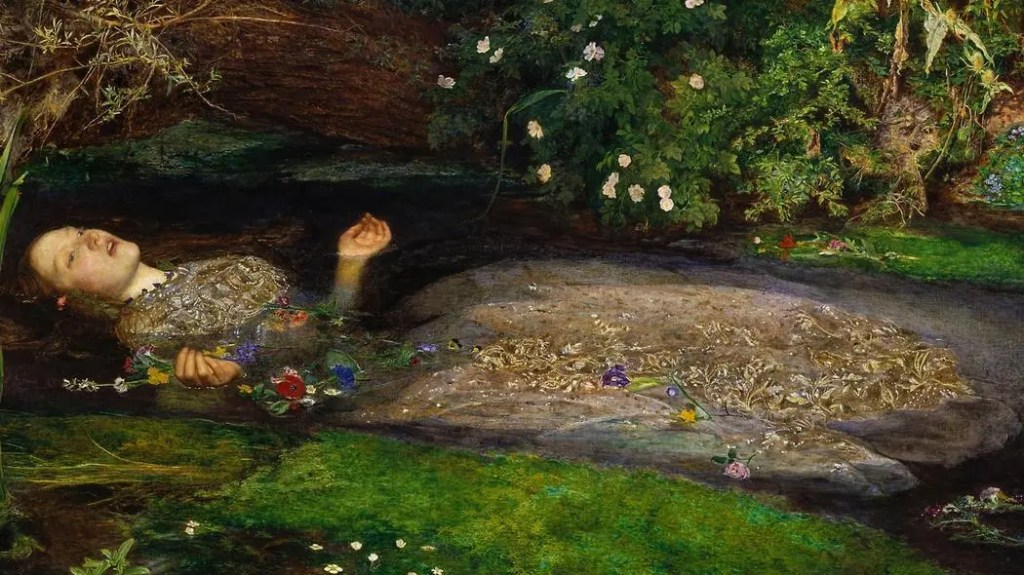
These specific criticisms may ring reminiscent of those pointed at the Pre-Raphaelites, Victorian masters of depicting fervent, aloof women, yet the sisters were and still are never mentioned along with them for reason. Ethereal, airy figures manifested from imagination, so unlike the Pre-Raphaelite tradition of painting their beloved models, differentiates the styles. The emotive, hallucinatory renderings of internal Elysian realms and distorted anatomy challenges the Pre-Raphaelite’s focus on realism and nature. This distinction applies even more so to Frances’ art, as her work commonly pictures female figures in androgynous, deformed, primitive detail. This mixture of obscured gender characteristics alludes to the feminist ideal of gender equality, which might have not been on forefront of the Pre-Raphaelites’ mind, no matter what they claimed. Eerie, raptured figures beholden to terrene, decorative backdrops and filled with internal passion is Frances’ personal, relative depiction of femininity, sought through the likes of her own imagination.
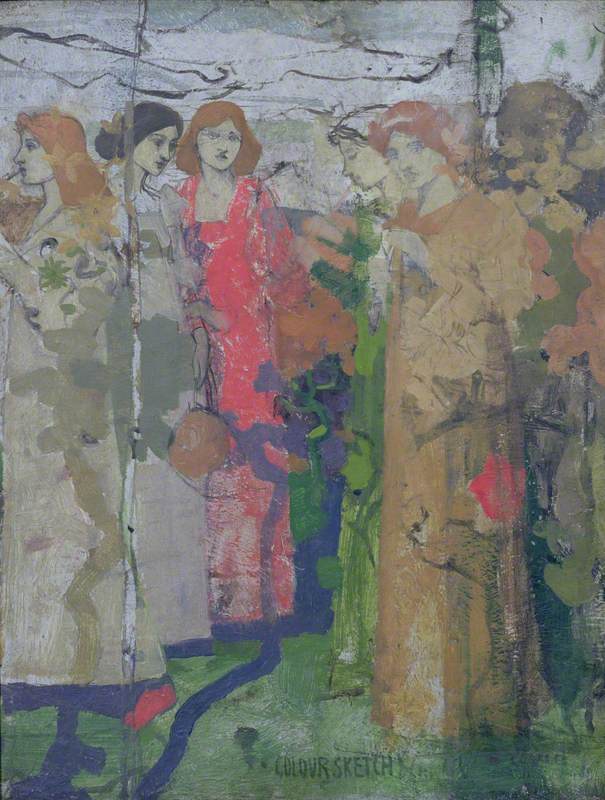
The “Celtic Revival,” a decorative folk movement contemporary to the Macdonald sisters heavily inspired their art. Originating in the mid 19th Century, it attempted to reclaim ancient identity in the United Kingdom, and was a direct protest against industrialization, a nostalgia-driven cry for local community that technology was erasing. Braids, knots, embroidery, metalwork, murals, decorative panels, and bookbinding made a bold come-back. Motifs and subjects involved Celtic folktales, fairytales, poetry, and literature.
The Glasgow Four’s collaboration, an intentional artistic move, makes deciphering which artist contributed to which piece nearly impossible. The sisters’ art looks impeccably similar to one another, if not the same, and artistic intent seen in one piece can be traced back to the other sister, and vice versa. Once they married, however, they begin to synthesize their art more with their architect husbands, combining beautifully rendered detail and mythical scenery with furniture, panels, and textiles.
Ethereal works fused with her husbands designs was Margaret’s specialty, while Frances leaned towards themes of marital distress, interpersonal conflict, and female melancholia. Differences in the sisters’ art increased as responsibility and motherhood slowly overtook Frances’ life. Both still portrayed faerie princesses, golden locks of hair, bows, and shades of pinks and baby blues, yet their moods shifted apart. Along with Frances’ husband’s unfortunate financial situation, his growing alcoholism, and his lack of support, time she could devote to art was slim in comparison to Margaret’s, who flourished in collaboration with Mackintosh. After the 1909 financial crisis, Frances took a variety of part-time jobs, leaving her with little to no room to paint.
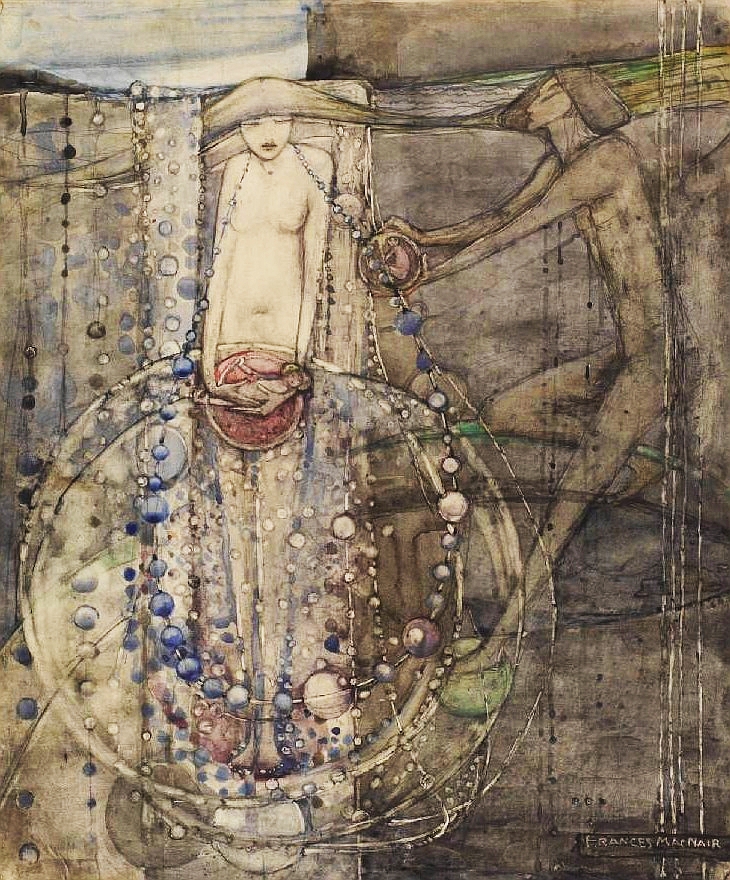
Man Makes the Beads of Life But Woman Must Thread Them, a watercolor painting from between 1912 to 1915, perfectly encapsulates the lifestyle of our newly-wed Frances. A contradiction to the idea that women are the world’s defaulted nurturers, the figure is actively portrayed as ailing and bereaved, with her body washed white from the “parasite” that is her fetus. The figure is stretched in ways reminiscent of gothic elongation. A confident, composed man is in the corner, presenting her with yet another “bead,” although her hands remain full from the last, not quite ready to take on more. The figure, rooted within Earth itself, is simultaneously so very estranged by it. Anger seeps through to the viewer, and the muddy, atmospheric scene reeks of burden.
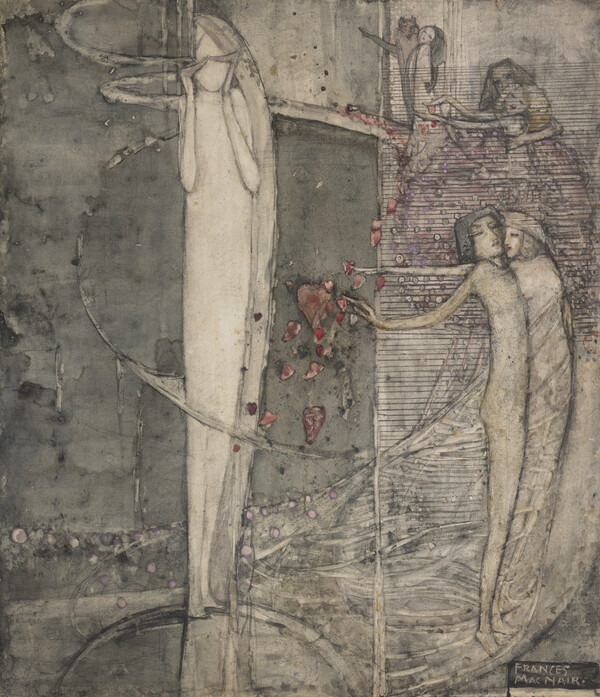
Sleep, another painting by Frances made from around 1908 to 1911, embodies her mental state, as well, picturing supposedly her own figure haunted by the happy-ever-afters of her peers. She dreams of girlhood, flora, and fauna while alas being chastised by motherhood and heartbreak.
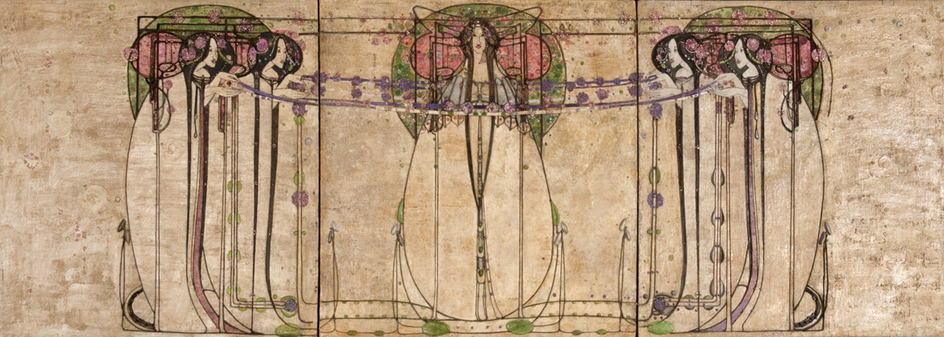
Margaret, on the other hand, was busy as a child-free artist. Together, she and Mackintosh made decorative panels for furniture and interiors using string and twine dipped in layers of gesso, a plaster-like medium used to prepare and smooth rough surfaces on materials such as canvas, scrim, wood, and paper. While mixing medias like watercolor and oil paints, mother of pearl, and metals like tin, copper, and brass, she would create dimension and depth within her mystical scenes.
The Vienna Secession, a 1897 movement started by artists Gustav Klimt, Koloman Moser, and Josef Hoffmann that attempted to stand against the Vienna academy’s traditional influence, found the Mackintosh couple’s interior design to be wondrous. The Glasgow Four was invited to Vienna by Fritz Wärndorfer, the Viennese patron of the group, where the Mackintosh’s then completed a commission for his music salon in 1903. Margaret created a total of 12 painted gesso panels in her usual “Glasgow Style,” and it was received so well that a “Scottish Section” was put in place at the Vienna Secession Exhibition in 1900. Her choice for display was her work The May Queen, which she painted that same year. Unlike Margaret and Charles Rennie displaying commercial pieces, Frances and James Herbert displayed pieces from their home. In 1902, the couples’ old headmaster, Fra Newbery, was a key organizer in the renowned Italian L’Exposition internationale des arts décoratifs modernes à Turin (Turin International Exhibition of Modern Decorative Arts.) Newbery helped them with exhibiting their work at the show, furthering their outreach within the Art Nouveau scene which was primarily in Vienna at the time.
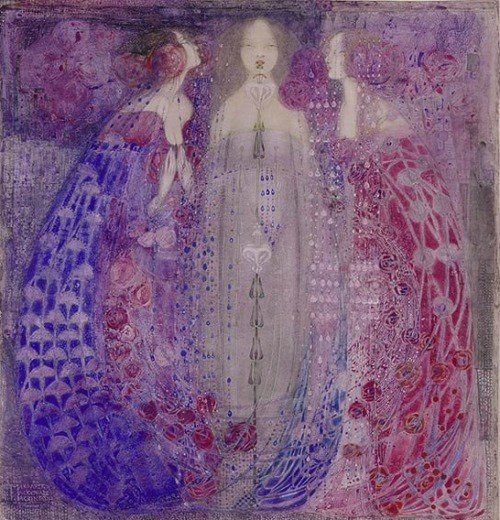
After 1914, Mackintosh’s health began to deteriorate, and Margaret devoted her time to caring for him instead of painting. In letters, Mackintosh has written to and about Margaret as so:
“Remember, you are half if not three-quarters in all my architectural work …” and “Margaret has genius, I have only talent.”
At 48, Frances tragically died from a cerebral hemorrhage, with her husband subsequently destroying all her work, refusing to ever draw again. Margaret disappeared into obscurity shortly after, and only very recently were their names, and not her husbands’, associated with their art. The imaginative, seraphic stories portrayed by the sisters in their art are mostly terra incognita in art history; do these freakishly protracted, yet dazzling figures have stories to share beyond what could be implied by knowledge of their personal lives, or were they created simply to be beautiful?
 Earth As My Guardian